ETCO2 Sensor About
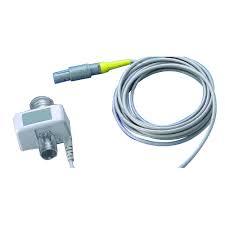
ETCO2 Sensor is compact and square in shape. It is offered with both flexible sensor cables and CO2 meter which is easy to assemble and use. This is made from high grade rubber latex material and equipped with digital panel screen which is fully automatic in function. ETCO2 Sensor is light in weight and very convenient to carry from one place to another. The sensor equipment is used to monitor patients CO2 level accurately and quickly. As well as, Co2 sensor device is reliable in functions and helps in giving each and every second recording for the right care of the patients.
Fast and Accurate EtCO2 MonitoringThis ETCO2 sensor boasts a rapid response time of fewer than two seconds and an impressive accuracy of 2 mmHg or 2% of the reading. Continuous real-time monitoring ensures that healthcare professionals can respond quickly to changing patient conditions. Its low sampling rate preserves sample integrity, all while maintaining high accuracy across a wide range of clinical scenarios.
User-Friendly Design with Minimal MaintenanceEquipped with automatic built-in calibration, this capnography sensor is simple to set up and operate. The robust medical-grade construction and user-focused engineering ensure that ongoing maintenance is minimal, supporting continuous use for over 5,000 hours. The compact design and various connectivity options (USB/BNC) enhance convenience for clinicians in any setting.
Versatile Compatibility and PortabilityDesigned for versatility, the sensor connects seamlessly to standard gas sampling lines and airway adapters. Its compatible with numerous patient monitors and anesthesia machines, making it a flexible choice for hospitals, clinics, and mobile medical units. The lightweight, portable form factor means it travels effortlessly from station to bedside when needed.
FAQs of ETCO2 Sensor:
Q: How is the ETCO2 sensor used in clinical settings?
A: The ETCO2 sensor is connected to a standard gas sampling line and airway adapter, allowing it to continuously measure and monitor end-tidal carbon dioxide (EtCO2) and respiration rates. It is typically attached to patient monitors or anesthesia machines in operating rooms, critical care, or emergency settings.
Q: What benefits does the automatic calibration provide?
A: Automatic calibration ensures the sensor maintains optimal accuracy without manual intervention. This feature minimizes user error and maintenance time, providing reliable, consistent measurements for medical professionals throughout its service life.
Q: When should I expect the sensor to be ready for use after powering on?
A: The sensor features a rapid warm-up time of less than five seconds, allowing it to be ready for real-time EtCO2 monitoring almost immediately after powering on.
Q: Where can the ETCO2 sensor be installed or used?
A: The ETCO2 sensor is suitable for a wide range of clinical environments, including operating rooms, intensive care units, emergency departments, and mobile medical facilities. Its compatibility with multiple monitors and anesthesia machines ensures seamless integration into various setups.
Q: What is the process for maintaining the sensor?
A: Maintenance is minimal, thanks to the sensors durable medical-grade construction and automatic calibration system. Users should periodically check and replace the gas sampling line and airway adapter as per manufacturer recommendations, and store the device in a cool, dry place when not in use.
Q: How does the apnea detection and alarming work?
A: The sensor continuously monitors respiratory gases and provides both audio and visual alarms if EtCO2 levels exceed preset thresholds or if apnea (loss of breathing) is detected. This feature enhances patient safety by ensuring immediate clinician notification of adverse events.
Q: What are the main usage advantages of this ETCO2 sensor?
A: Key advantages include fast response, high measurement accuracy, low sampling rate for patient comfort, minimal maintenance, portability, and dependable real-time operation for precise respiratory monitoring in diverse medical environments.






 Send Inquiry

 Send Inquiry
 Send Inquiry